
Submissions
Submission Preparation Checklist
As part of the submission process, authors are required to check off their submission's compliance with all of the following items, and submissions may be returned to authors that do not adhere to these guidelines.-
1) Articles are typed in single space, Arial font size 12, Microsoft Word, OpenOffice or RTF format.
2) The work title limit is up to 150 characters.
3) The maximum text size, excluding references, tables and article cataloging data (called metadata), is 3000-3500 words for original articles and for review articles of up to 6000 words.
4) The number of tables and/or figures is 5 for all types of articles except for review articles, which is 8 (including CONSORT flow diagram, when relevant). NEVER SEND TABLES WITHOUT BEING IN WORD (submissions with them in figure format will be rejected) and figures must be created in an MS Office program, send the native file (Word, Powerpoint, Excel). Inclusion of a figure that has been previously published must be accompanied by the source/reference from which it came.
5) For reasons of style, the data listed in the form of a table or illustrations can be referenced in the text, but not repetitive in detail, but only reporting in the text the most significant ones, with the rest being directed to the table from which they were taken .
6) You can only include up to 50 references.
7) References in the text: cite them in Arabic numerals in the order of appearance, and superscripts (nonono.1,3,5-7,9)
8) An abstract must be sent in Portuguese (ABSTRACT) and in English (ABSTRACT) with up to 300 words, in a single paragraph, and structured in: Rationale, Objectives, Methods, Results, Conclusion (abstracts in letters to the editor and editorials are excluded ). They must not contain abbreviations, acronyms, statistical data or references. It is necessary to enter 3 to 5 KEYWORDS in Portuguese and KEYWORDS in English that are contained in the Health Sciences Descriptors – DeCS or MESH (Attention: keywords that are not included in these URLs should not be mentioned).
9) Use Terminologia Anatômica, São Paulo, Editora Manole, 1stEd., 2001 in the relevant terms. When authors do not use it, BioSCIENCE is free to do so.
10) Enter the full name of each author (first name, middle initial and last name); name of the department(s) and institution(s) with which each author is affiliated, ORCID, and what contribution each author had according to the CRediT taxonomy and Author Contributions (CRediT taxonomy)
11) Use only standard abbreviations for internationally approved units of measurement (International System of Units - SI - General Framework of Units of Measurement)
12) Include the implications of the findings, that is, what they will be used for, and the limitations of the work in the last paragraph of the Discussion.
13) In Conclusions, provide only those based on the study and that are directly supported by the results. Give equal emphasis to positive and negative findings, as they have equal scientific merit. Uses for clinical practice or health policies can be referred to, in a pragmatic way (Attention: the Conclusions must only and specifically respond to the Objective items, referred to in the text, NOTHING BEYOND, and without referring to results, but rather the interpretation/application that the authors had with the results obtained. NEVER REFER TO THE LITERATURE)
14) All scientific concepts and assertions emanated by articles, or printed advertisements, are the sole responsibility of the authors or advertisers.
15) Use inclusive language Use of inclusive language
16) Articles can be accompanied by video, podcast, videocast and visual abstract (graphical abstract)
Author Guidelines
Articles must be submitted on the journal's website, at the following electronic address: www.bioscience.org.br. When accessing it, the author responsible for sending the article must identify themselves using a login and password.
GENERAL GUIDELINES FOR ANY TYPE OF ARTICLE
These guidelines are detailed on the website:
https://www.icmje.org/icmje-recommendations.pdf (pages 14 to 19.)
If there are individual specifications for a given type, they will be mentioned together with their summarized descriptions below.
Articles must be typed in single space, in Arial font size 12.
- The title length limit is up to 150 characters.
- The maximum text size, excluding references, tables and cataloging data in the article (called metadata), should be 3000-3500 words and for review articles up to 6000 words.
- The limit for tables and/or figures is 5 for all types of articles except for review articles where the limit is 8 (including CONSORT flow diagram when applicable), NEVER SEND TABLES WITHOUT THEN IN WORD (submissions with them in figure format will be rejected) and figures must be created in an MS Office program, send the native file (DOC, PPT, XLS). If a figure has been previously published, acknowledge the original source by indicating the reference source where the original was published.
- Data in table or illustration form should be referenced in the text, not repeated (e.g. detailed information should not be provided in the text and tables).
- Only up to 50 references must be included.
Examples of references
Journal article
1. Tafra L, Lannin DR, Swanson MS, et al. Multicenter trial of sentinel node biopsy for breast cancer using both technetium sulfur colloid and isosulfan blue dye. Ann Surg. 2001;233:51–59.
Book chapter
2. Tisi PV, Shearman CP. Systemic consequences of reperfusion. In: Grace PA, Mathie RT, eds. Ischaemia-reperfusion injury. London: Blackwell Science; 1999:20–30.
Entire book
3. Lippincott Williams & Wilkins; 1999.
Electronic Pre-print article
4. Author. Article title. Journal title. Year Month Day; [Epub ahead of print]. Accessed on mm/dd/yyyy. Available at: website (exact website, or enough to lead the reader to the link).
Online journals
6. Friedman SA. Preeclampsia: a review of the role of prostaglandins. Obstet Gynecol [serial online]. January 1988; 71:22-37. Available from: BRS Information Technologies, McLean, VA. Accessed December 15, 1990.
Data base
7. CANCERNET-PDQ [online database]. Bethesda, MD: National Cancer Institute; 1996. Updated March 29, 1996.
World Wide Web
8. Gostin LO. Drug use and HIV/AIDS [JAMA HIV/AIDS web site]. June 1, 1996. Available at: http://www.ama-assn.org/special/hiv/ethics. Accessed June 26, 1997.
References in the text: Quote them in Arabic numerals in the order of appearance, superscripted like this example: nonono.1, 3, 5-7, 9
- An abstract must be sent in Portuguese and English with up to 300 words, in a single paragraph, and structured as follows: Rationale, Objectives, Methods, Results, Conclusion (summaries in letters to the editor and editorials are excluded). They must not contain abbreviations, acronyms or references. It is necessary to insert 3 to 5 descriptors in Portuguese and keywords in English that are contained in the Health Sciences Descriptors – DeCS or in MESH (Attention: descriptors and keywords that are not included in these URLs must not be mentioned).
- Using Anatomical Terminology, São Paulo, Editora Manole, 1stEd., 2001
- Full name of each author (first name, middle initial and last name); name of the department(s) and institution(s) with which each author is affiliated, ORCID and what was the contribution of each author to the work that should be attributed to him/her by the CRediT taxonomy
- Use only standard abbreviations for units of measurement and approved abbreviations (International System of Units - SI - General Table of Units of Measurement)
- Include the implications of the findings and limitations of the work in the last paragraph of the Discussion.
- In Conclusions, provide only those study conclusions that are directly supported by the results. Give equal emphasis to positive and negative findings of equal scientific merit. Additionally, provide a statement of relevance indicating implications for clinical practice or health policy, avoiding speculation and overgeneralizations. Attention: conclusions must specifically respond to the objective items referred to in the text
- All scientific concepts and assertions emanated by articles, or printed advertisements, are the sole responsibility of the authors or advertisers. When authors do not use the anatomical terminology mentioned, BioSCIENCE is free to do so.
Author contributions (CRediT taxonomy)
Use of word processing software
Video, podcast, videocast and visual abstract (graphical abstract)
INNOVATIONS
BioSCIENCE, as well as the most important national and international medical journals, are adding small texts to their publications, called Central Message and Perspectives, as well as an image (optional) that characterizes the theme. In addition, at the authors' discretion, a Visual Abstract or Highlights may be included, to be disseminated via Twitter, Facebook and other social media. The words used in all these texts must be simple so that the medical/lay public can understand the advancement of science that the article proposes and encourage them to read it in full. In detail: 1) the Image (optional) is representative of something interesting in the work, which may be histological, surgical or other that contextualizes the theme (Figure 1); 2) the Central Message is not a brief summary of the results, but a summary of them in a simple way (maximum 100 words, Figure 2); the Perspective is to indicate the significance of the findings and how the authors anticipate their results will assist clinical practice (maximum 100 words, Figure 3). The Visual Abstract or Highlights present a brief graphical summary of the article. They should indicate the topic being addressed and provide a summary of the results, most often using simple icons, figures and graphs. One to three columns can be used (Figure 4).
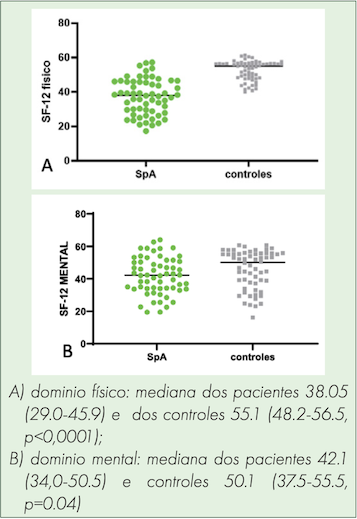
FIGURE 1 – Example image
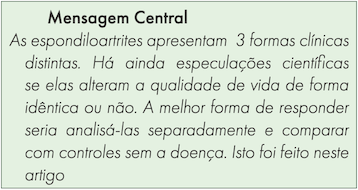
FIGURE 2 – Example of Central Message
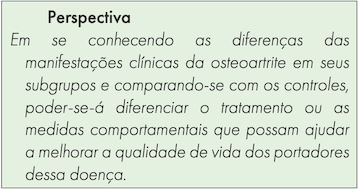
FIGURE 3 – Example of Perspective
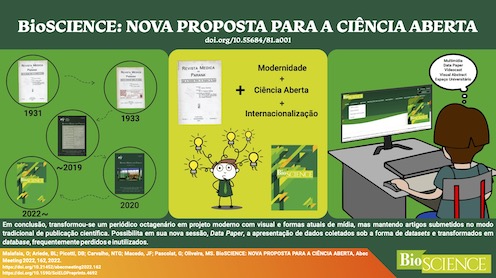
FIGURE 4 – Example of Visual Abstract
ACCEPTED STUDY TYPES, DESCRIPTIONS, REQUIREMENTS AND SUBMISSION GUIDELINES
Non-randomized controlled trial
Sections
-
Editorial
Editorials (or invited commentaries).
Editorials represent important opinion pieces in scientific journals and often serve special purposes. Editorials written by the journal's editor or a member of the editorial staff may communicate information about the journalor the journal's policies or procedures or may present the opinions of the editors or editorial staff on a subject relevant to the journal's readers or about a published article. Editorials may also be written by authors who are not members of the editorial team but who are invited to provide discussion and authoritative opinion on an accompanying article or on another topic. In most cases, guest editorials (also called Guest Commentaries in some journals) accompany research articles or other articles published by the journal and typically serve to provide balance, additional context, and caveats about the importance and implications of the accompanying article. . Guest editors may sometimes be asked to comment on separate topics of interest to the journal's readers or editors.
-
Original Article
-
Review Article
-
Case Report
A case report refers to the description of a rare, interesting or picturesque clinical case. In it, the details of the clinical presentation with results of clinical and imaging exams, the therapeutic approaches or procedures in detail and the evolution are presented. It must be clear, precise and objective in writing and presentation accompanied by various images. It must be written without a summary.
- Follow the guidelines on the website: CARE (https://www.care-statement.org)
- The title and subtitle must be: (Report title): Case report
- It is necessary to insert 3 to 5 descriptors in Portuguese and keywords in English that are contained in the Health Sciences Descriptors – DeCS (https://decs.bvsalud.org) or in MESH (https://www.ncbi.nlm. nih.gov/mesh - (Attention: descriptors and keywords that do not appear in these URLs must not be cited).
- The report cannot, in any way, have the possibility of identifying the patient. If this occurs, legal proceedings may be taken and directed against the authors of the work.
- It should be divided into: Introduction, including the objective in the last sentence; case report, with all the data referred to in the caput of this item; discussion, with “take away” (taking home a message to think about) as the last sentence but no conclusion written (a case only raises questions and not conclusions about what is best); up to 5 references.
- It should be focused on: symptoms, clinical history, interventions and their results, physical examination data, personal and family clinical history, diagnostic means used, treatment(s) carried out in detail, evolution and prognosis.
- Non-extensive discussion with the medical literature cited in the references (there cannot be a reference without being cited in the text.
- As mentioned, end the discussion with primary “take away” lessons from this report and not as a conclusion.
- Always seek to obtain written Informed Consent from the patient.
-
Correspondence and letters
Responsible debate, criticism, and disagreement are important features of science, and journal editors should ideally encourage this discourse within their own journals about the material they publish. The correspondence section may include letters to the editor, author responses, and online comments and should provide readers with a mechanism to submit comments, questions, or criticisms about published articles. As part of the responsibility that authors assume in exchange for publishing their articles, they are responsible for responding to readers' critical points. This type of interaction is an important part of post-publication peer review and helps promote responsible scientific dialogue.
Letters that raise reasonable and important questions about the scientific, clinical, or ethical aspects of a study or appropriate interpretation, along with scholarly responses from the authors, can generate informative, useful, and lively exchanges. Another form of post-publication exchange between readers and authors of published articles involves online comments and responses, with the exchanges posted on journal websites or other venues rather than being published as letters in periodicals.
Copyright Notice
TRFANSER OF COPYRIGHT TO BioSCIENCE all authors grant the journal the copyright of the published article, including illustrations, tables, texts, metadata or other elements accepted in the publication.
All magazine content, except where otherwise identified, is licensed under a Creative Commons attribution type BY (CC-BY 4.0).
The online magazine is free and open access.
Privacy Statement
The names and email addresses entered in this journal site will be used exclusively for the stated purposes of this journal and will not be made available for any other purpose or to any other party.