
INSTRUCTIONS TO AUTHORS
ARTICLE GUIDELINES
Scope and policies
BioSCIENCE (ISSN online 2764-9350 and printed 2764-9342) continuation of the title Revista Médica do Paraná, which remained that way from 1933 until 2022.
BioSCIENCE publishes continuous flow articles of different types, described in the SUBMISSION icon – Types of accepted studies –, based on their originality, contemporary importance and interest for the journal's readers. BioSCIENCE is committed to the principles of ethics (COPE), respect for the individual and experimental animals, humanization, honesty, pioneering and excellence.
BioSCIENCE does not charge submission and/or publication fees.
Accepts manuscripts already published in preprint, considered reliable by the editorial committee.
The average processing time for manuscripts, including the time between receipt, corrections and approval by peer-review is approximately 3 months and publication time of up to 6 months.
All published articles will receive a DOI (Digital Object Identifier) to enable greater reliability of the registered information and full access to the published article by researchers and readers in general
Privacy Policy
The names and addresses provided in this journal will be used exclusively for the services provided by this publication, and will not be made available for other purposes or to third parties.
Ethical Considerations
If the work involves the use of human beings, it must be ensured that it was carried out in accordance with the Declaration of Helsinki of the World Medical Association and the Resolution 466/2012 of the National Health Council of Brazil. It must always be accompanied by informed consent. The submission must mention, in the first sentence of the Method, the number given by the research ethics committee (CAAE - Certificate of Presentation of Ethical Appreciation) that analyzed the project, and also, if any, the number registered on the Platafoma Brasil.
People's privacy rights must always be observed. The terms sex and gender must be used correctly. Unless written permission is obtained from the patient (or, where applicable, closest relative), the personal data of any patient included in any part of the article and in any supplementary materials (including all illustrations and videos) must be removed . If the work involves the use of animals, it must comply with Federal Law No. 11,794/08 or the DCBA, comply with the ARRIVE 2.0 guidelines and authors must clearly indicate in the manuscript that such guidelines were followed. The sex of the animals must be indicated and, when appropriate, its influence (or association) on the results of the study.
Peer review process (peer-review)
All manuscripts will only begin the processing process if they comply with the Instructions for Authors. The assessment of merit is made by the Editors and Editorial Board based on the originality, pertinence, academic quality and relevance of the manuscript to the area.
Approved at this stage, manuscripts will be forwarded to ad hoc reviewers selected by the editors. Each manuscript will be sent to two reviewers with recognized competence in the topic covered. In case of disagreement, the original will be sent for a third evaluation.
The journal adopts the blind review system for peer evaluation and is confidential regarding the identity of authors and evaluators. Therefore, the publication requests that authorship information be indicated only on the title page, which will be removed for evaluation.
Documents created in Microsoft Word must have the author identification removed from the document properties: From the main menu, click Save As > Tools (or Options on Mac) > Security Options... > Remove personal information from file when saving > OK > Save.
Reviewers' opinions have three possibilities: a) approval; b) resubmission; c) refusal. In any of these cases, the author will be notified.
The opinions are analyzed by the associate editors, who propose to the Chief Editor whether or not to approve the manuscript. The final decision on the opinion of the article (approved or rejected) will be made by the Editor-in-Chief.
Rejected manuscripts, but with the possibility of reformulation, may be returned as new work, starting another evaluation process.
Conflict of interest
Authors: Authors must declare, explicitly and individually, any potential conflict of financial interest, direct and/or indirect, and non-financial, etc.
Ad hoc reviewers: If a conflict of interest is identified on the part of the reviewers, the Editorial Committee will forward the manuscript to another ad hoc reviewer.
General conditions
As part of the submission process, authors are required to check the submission for compliance with all items listed below. Submissions that do not comply with all of these standards will be returned.
Articles must be submitted via the Journal's website, at the following electronic address: www.bioscience.org.br. When accessing it, the author responsible for sending the article must identify themselves using a login and password.
Mandatory items are:
- The contribution must be original and unpublished, and not being evaluated for publication by another journal. Presentations at congress, as oral presentations, publications in proceedings or as a preprint do not invalidate publication in BioSCIENCE.
- The text must be written in single space, with Arial 12 font, not have underlined terms (except in URL addresses when applicable), have figures and tables inserted in the text in parentheses as close to where they are referred to. The text must follow the style standards and bibliographic requirements described here.
- Authorship credit must be based on substantial contributions, such as: (I) conception and design, (II) analysis and interpretation of data and discussion of results, and (III) review and approval of the final version of the article. There is no justification for including the names of authors whose contributions do not fit into what is established in the convention entitled CRediT
- The institutional link must be informed at up to three levels. (Ex: University, Faculty, Program, Center, School, Department). The nomination of the corresponding author must be based on the highest degree and all authors must have and inform the ORCID® registration number. Registration is free and available at: https://orcid.org/
- Authors must explicitly declare, individually, any potential conflict of financial interest, direct and/or indirect, and non-financial, etc., as well as any conflict of interest with ad hoc reviewers.
- Inform whether the article comes from a Dissertation or Thesis, indicating the title, author, institution and repository.
Specific conditions
- These guidelines follow international standards that can be found in detail on the website https://www.icmje.org/icmje-recommendations.pdf (pages 14 to 19).
- Articles must be prepared in single space between lines, Arial font size 12 and on A4 paper, Microsoft Word, OpenOffice or RTF format.
- Manuscripts can be sent in Portuguese, English or Spanish.
- The work title limit is up to 150 characters.
- For original articles, the maximum text limit must be 3000-3500 words (excluding: summary, abstract, tables, graphs, figures and references) and for Review articles of up to 6 thousand words (excluding: summary, abstract, tables, graphs, figures and references).
- The number of tables and/or figures is 5 for all article types except for Review articles, which is 8 (including CONSORT flow diagram, when applicable).
- The author is responsible for the quality of the illustrations (above 300 dpi), which must allow reduction without loss of definition and be 16 cm wide, maximum.
- Tables and Charts must be generated in Word. Tables and Charts in image format will be rejected; and the figures must be generated in an MS Office program, sending the native file (Word, Powerpoint, Excel. Inclusion of a figure or table that has been previously published must be accompanied by the document certifying permission for use, and be cited the appropriate source.
- Figures are not allowed to represent the same data as tables or data already described in the text.
- Mandatory suggestion of an abbreviated title for the header, which does not exceed forty characters (including spaces), written in Portuguese (or Spanish) and English.
- Abbreviations and acronyms: must be used in a standardized way, restricted only to those used conventionally or sanctioned by use, accompanied by the meaning, in full, when cited for the first time in the text. They should not be used in the title and abstract.
- Quotations and References according to the Vancouver style:
- Citations and references must be numbered consecutively, following the order in which they were first mentioned in the text, according to Vancouver style. In references with up to six authors, all must be cited.
- The abbreviations of the titles of the periodicals cited must be in accordance with the Index Medicus.
- Citations in the text should be numbered progressively in the order in which they appear in the text, in Arabic numerals after the citation (examples: Cholecystopathy.... become symptomatic.1 Patients were studied as follows.2-5...), and must be included in the References list.
- It can include up to 50 references, according to the Vancouver style guidelines (https://www.nlm.nih.gov/bsd/uniform_requirements.html), as per the following examples:
Examples of references
Journal articles
Puccia R, Woodson BT. Palatopharyngoplasty and palatal anatomy and phenotypes for treatment of sleep apnea in the twenty-first century. Otolaryngol Clin North Am. 2020;53(3):421-9.
Article with more than six authors from the Internet
Miguel ID, Ranieri RA, Custódio P, Fattouch SBA, Biagini G, Galera R, et al. Osteomyelitis: epidemiological profile and outcomes observed in patients admitted to a public hospital in Curitiba. BioSCIENCE. 2023 [accessed 2023 4]; 81(1);3-6. Available at: https://bioscience.org.br/bioscience/index.php/bioscience/article/view/299/215
Article with DOI number
Thuler E, Rabelo FAW, Yui M, Tominaga Q, Dos Santos V Jr, Arap SS. Correlation between the transverse dimension of the maxilla, upper airway obstructive site, and OSA severity. J Clin Sleep Med. 2021;17(7):1465-73. https://doi.org/10.5664/jcsm.9226
Institutional electronic documents
José Alencar Gomes da Silva National Cancer Institute. Cancer statistics. 2022 [accessed 2023 Apr 15]. Available at: https://www.inca.gov.br/numeros-de-cancer
Dataset
Appel AL, Albagli S. The adoption of Article Processing Charges as a business model by Brazilian Open Access journals [dataset]. 2019 Feb 1 [cited 2023 Aug 3]. Zenodo. 2019. 1 data set (3CSV, 2XLSX, 1TXT files). http://dx.doi.org/10.5281/zenodo.2555317
Preprint
Gorzoni ML. Chloroquine and hydroxychloroquine: potentially inappropriate medications for the elderly? 2020. EmeRI. https://preprints.ibict.br/handle/1618034/60
Book chapters
Tisi PV, Shearman CP. Systemic consequences of reperfusion. In: Grace PA, Mathie RT, editors. Ischaemia-reperfusion injury. London: Blackwell Science; 1999. p.20-30.
Electronic book chapter
Baranoski MCR. Citizenship of homosexuals. In: Baranoski MCR. Adoption in same-sex relationships. 2a. ed. Ponta Grossa: UEPG; 2016 [accessed 2023 Aug 3]. Available at: http://books.scielo.org/id/ym6qv
For other examples, we recommend consulting the standards of the Committee of Medical Journals Editors (Vancouver Group): http://www.icmje.org; https://www.nlm.nih.gov/bsd/uniform_requirements.html
Innovations
BioSCIENCE, as well as the most important national and international medical journals, are adding small texts to their publications, called “Central Message” and “Perspective”, as well as an image (optional) that characterizes the theme. In addition, at the authors' discretion, a Visual Abstract or Highlights may be included, to be disseminated via X/Twitter, Facebook and other social media. The words used in all these texts must be simple so that the medical/lay public can understand the advancement of science that the article proposes and encourage them to read it in full. In detail: 1) the “Image” (optional) is representative of something interesting in the work, which may be histological, surgical or other that contextualizes the theme (Figure 1); 2) the “Central Message” is not a brief summary of the results, but a summary of them in a simple way (maximum 100 words, Figure 2); the “Perspective” is to indicate the significance of the findings and how the authors anticipate their results will assist in clinical practice (maximum 100 words, Figure 3). The “Visual Abstract” or “Highlights” present a brief graphic summary of the article (https://mindthegraph.com/). They should indicate the topic being addressed and provide a summary of the results, most often using simple icons, figures and graphs. One to three columns can be used (Figure 4).
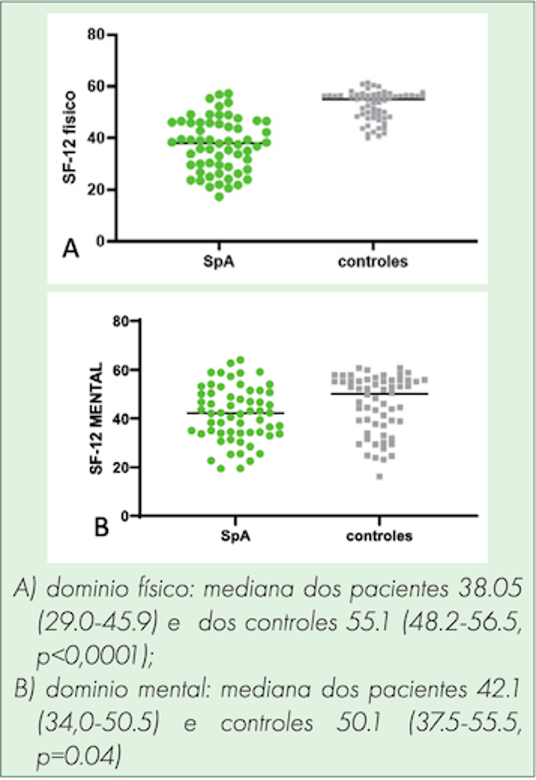
FIGURE 1 – Example image
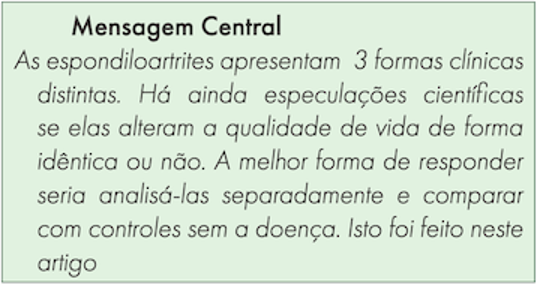
FIGURE 2 – Example of Central Message

FIGURE 3 – Example of Perspective

FIGURE 4 – Example of Visual Abstract
Types of study accepted, descriptions, requirements and guidelines for submission (to make it easier, click on the desired links and you will have details on how to submit)
Non-randomized controlled trial